
Why System Architecture Has Become the Foundation of Digital Success
Date: July 28, 2026
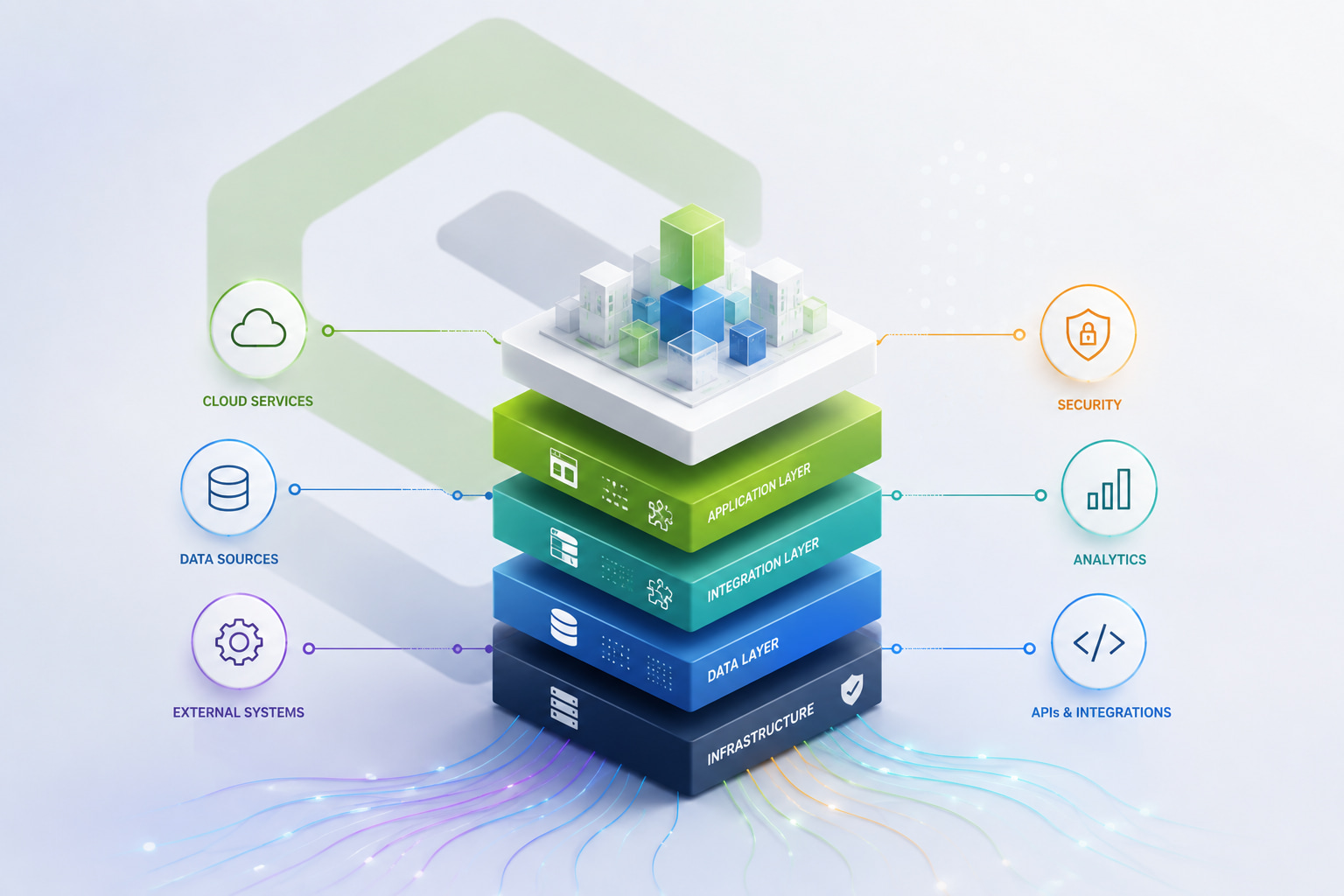
When discussing digital transformation, the conversation often revolves around new applications, cloud platforms, or the latest technologies. Yet long-term success is determined not only by the technologies an organization adopts, but by how those technologies are designed, connected, and integrated into a broader digital ecosystem.
Behind every reliable and high-performing system lies a well-planned architecture. It provides the foundation upon which business processes are built, platforms are integrated, and new services are introduced—without compromising performance, security, or operational continuity.
Great Architecture Is Built for the Future
Technology evolves continuously. Business needs change, market expectations grow, and digital transformation has become an ongoing journey rather than a project with a defined endpoint.
For this reason, system architecture should never be designed solely to meet today’s requirements. It must provide the flexibility needed to support business growth, integrate emerging technologies, and adapt to future challenges without requiring the entire infrastructure to be rebuilt.
Integration Is the Heart of Every Digital Ecosystem
Today, no business system operates in isolation. Financial platforms, ERP and CRM systems, online portals, mobile applications, and cloud services must communicate seamlessly to support efficient operations.
A modern architecture ensures that these systems interact securely, reliably, and efficiently. When systems are designed to work together, information flows without interruption, processes become more automated, and decision-making is driven by accurate, real-time data.
In this sense, architecture is far more than a technical framework. It is the foundation that connects every component of a digital ecosystem into a unified and efficient environment.
Flexibility Has Become a Competitive Advantage
Many technology initiatives fail not because they rely on the wrong technology, but because they are built on architectures that cannot evolve.
A well-designed architecture enables businesses to introduce new capabilities, adopt cloud platforms, integrate with new partners, and continuously improve their services without disrupting existing operations.
The greater an organization’s ability to adapt to change, the stronger its long-term competitive advantage becomes.
Security Begins with Architecture
Security should never be treated as a feature added after a system has been completed. It should be embedded into the architecture from the very beginning.
Access control, data protection, system segmentation, monitoring, and service resilience are significantly more effective when they are incorporated into the architectural design. This approach not only reduces risk but also creates an infrastructure that is more resilient, easier to manage, and better prepared for future growth.
An Investment That Continues to Deliver Value
Applications change. Platforms evolve. Technologies are replaced.
A well-designed system architecture remains the foundation upon which future innovation is built. It enables businesses to embrace new technologies without sacrificing stability and to grow without being constrained by their existing infrastructure.
As Ermal Beqiri, founder of Soft & Solution Group, says:
“Technology will continue to evolve. What determines the longevity of a system is the architecture on which it is built. When the foundation is strong, businesses can grow, and adapt without compromising the stability of their systems.”
At Soft & Solution Group, we believe digital transformation doesn’t begin with choosing the latest technology. It begins with building a secure, scalable, and resilient architecture that supports business growth, not only today, but for years to come. A strong architecture is more than a technical decision; it is the foundation for innovation, performance, and long-term digital success.