
Why Most Systems Become More Complex After Launch
Date: June 3, 2026
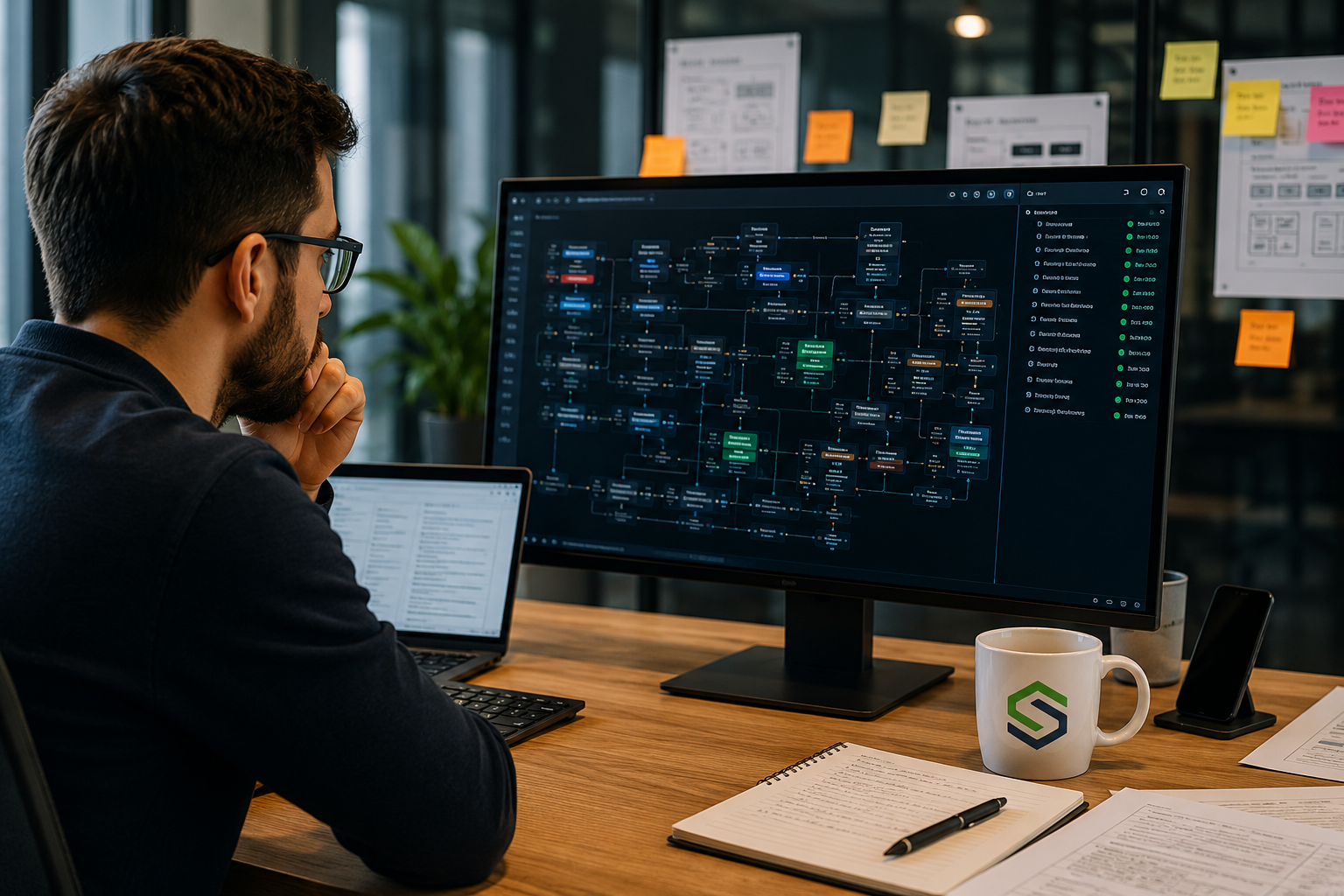
Many digital systems are built to solve a specific problem, with a limited number of users, clearly defined processes, and only a few integrations. In the early stages, the architecture is relatively easy to understand and manage.
However, very few systems remain that simple for long.
How Complexity Grows Over Time
As years pass, new features are added, operational processes evolve, and the number of users increases. Each change may seem minor on its own, but their cumulative effect creates a level of complexity that is often underestimated.
One of the most common challenges is not building new functionality, but maintaining clarity as the system continues to grow.
The more components that are added, the greater the number of dependencies between them. A change in one part of the system can affect processes that initially appeared unrelated. At this stage, the challenge is no longer development alone. The challenge becomes managing complexity.
The Role of Integrations in Increasing Complexity
This is particularly evident in systems that rely on multiple integrations. Every integration adds value, but it also introduces new dependencies, monitoring requirements, and maintenance responsibilities. Over time, operating the system becomes just as important as developing it.
In practice, the systems that maintain long-term stability are not necessarily those built with the newest technology. They are the ones designed with an architecture that can evolve without losing control over complexity.
For this reason, at Soft & Solution Group, architecture is not treated as a technical decision made only at the beginning of a project. It is considered an ongoing process that must support growth, integrations, and operational requirements throughout the entire lifecycle of the system.
Complexity Is Built Gradually
As Ermal Beqiri, founder of Soft & Solution Group, explains:
“Systems do not become complex overnight. Complexity is built gradually through every feature, integration, and decision made along the way. The real challenge is not avoiding complexity, but managing it in a way that keeps the system stable, maintainable, and under control.”
In the end, the longevity of a system depends on more than how it is initially built. It depends on the ability to keep it understandable, manageable, and reliable as it continues to grow and evolve.