
When the Cloud Goes Down: What Should Businesses Do to Avoid Losing Access to Their Systems?
Date: November 16, 2026
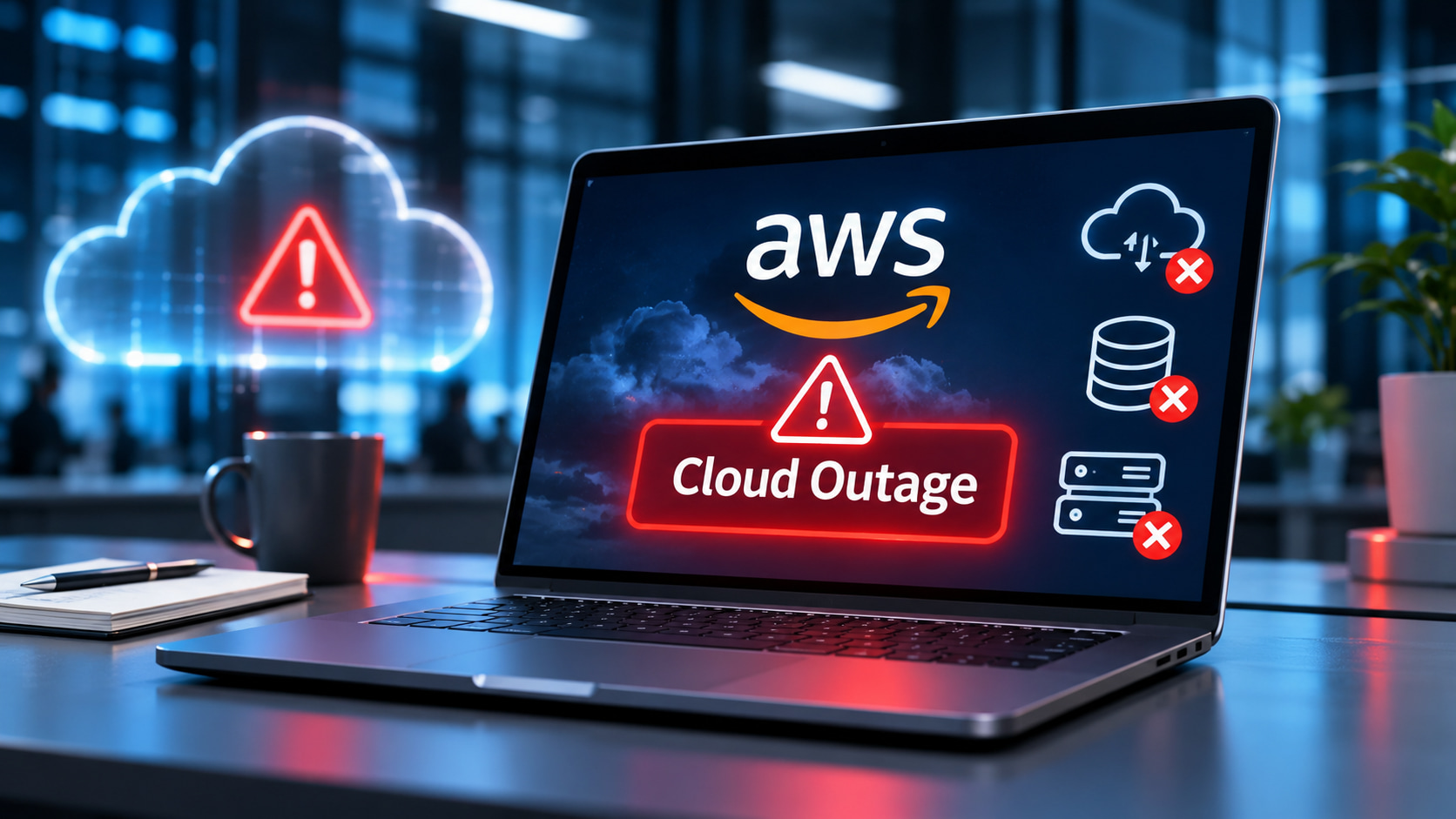
Modern businesses rely on cloud infrastructure to run websites, applications, databases, authentication, payments, customer support, and internal operations. When a cloud region or a foundational service becomes unavailable, the impact can quickly move beyond a single application. Teams may lose access to systems, automated processes may stop, and customers may experience delays or failed transactions.
An AWS incident on November 15, 2026 demonstrated why cloud resilience must be planned rather than assumed. AWS reported increased connectivity issues in the US-EAST-1 Region, also known as N. Virginia. The incident affected sign-up, authentication, and connectivity for customers using IAM Identity Center and a number of AWS services that depended on it. This was a regional incident; it did not mean that all AWS regions or every AWS customer were unavailable.
For organisations reviewing their IT strategy, Soft & Solution Group recommends looking beyond provider availability and assessing how applications are designed, connected, and recovered. The central question is whether essential business processes can continue when a region, identity service, network component, or application dependency is disrupted.
What happened during the AWS US-EAST-1 incident?
According to the AWS Health Dashboard, connectivity issues began at approximately 3:05 a.m. Pacific Standard Time on November 15. Customers experienced sign-up errors, authentication problems, and connectivity issues in US-EAST-1. Users relying on IAM Identity Center to access the AWS Console or other services, including Kiro and Amazon Connect, were among those affected.
AWS reported that engineers began investigating shortly after 3:10 a.m. Authentication impacts were mitigated by approximately 5:20 a.m., and most AWS services had recovered around that time. A subset of customers using Network Load Balancers in one cell of Availability Zone use1-az1 continued to experience connectivity issues until approximately 6:21 a.m. AWS marked the incident resolved and advised customers to retry failed requests.
Source: AWS Health Dashboard, “Increased Connectivity issues in US-EAST-1,” November 15, 2026.
AWS listed 11 affected services, including IAM Identity Center, AWS IoT Device Management, AWS NAT Gateway, AWS Sign Up, AWS Step Functions, Amazon CloudWatch, Amazon Connect, Elastic Load Balancing, OpenSearch Service, VPC Lattice, and Kiro. The exact impact depended on the service and the way each customer used the affected components.
Why can a regional cloud issue affect business operations?
Cloud applications are built from connected components. A customer-facing application may run in one environment but rely on a central identity provider, network service, database, API, or load balancer located elsewhere. If one of those dependencies becomes unavailable, the application may remain online while users cannot sign in or complete important actions.
For example, a business portal may load but reject authentication requests. An automated workflow may stop because it cannot call an API. A customer-support team may lose access to a cloud contact-centre service, while monitoring or deployment tools may be affected by the same underlying dependency. The result is that technical availability does not always equal business availability.
Lesson 1: map critical cloud dependencies
Businesses should maintain an up-to-date map of the systems that support each critical process. This should include cloud regions, Availability Zones, identity and access services, networking, databases, storage, APIs, DNS, third-party integrations, and the applications used by employees and customers.
For each dependency, identify what happens if it becomes unavailable and how quickly the business must recover. This helps teams understand whether a system has a single point of failure and which dependencies deserve stronger resilience controls.
Lesson 2: design for multiple Availability Zones and, where needed, multiple regions
High availability begins with removing unnecessary single points of failure. Where supported by the service and application design, workloads can be distributed across more than one Availability Zone. For critical applications with strict recovery requirements, a multi-region design may be appropriate.
However, multi-region architecture is not an automatic guarantee of continuity. Applications must be designed to replicate data safely, manage failover, handle identity and networking dependencies, and avoid split-brain or inconsistent transactions. A secondary region that has never been tested may not provide the expected protection during a real incident.
Lesson 3: make identity and access resilient
The AWS incident highlighted how important identity services are to cloud operations. Even when application infrastructure is running, users may be unable to reach it if authentication or access-management components are unavailable. Businesses should review their identity architecture, administrative access paths, and emergency procedures.
A controlled break-glass process can help authorised administrators respond when the normal identity path is disrupted. Such accounts must be tightly protected, monitored, tested, and used only under documented conditions. They should never become an informal way to bypass normal access controls.
Lesson 4: backups are not the same as availability
Backups protect data against deletion, corruption, or loss, but they do not automatically keep an application online during a regional or service disruption. Availability requires appropriate redundancy, while disaster recovery requires the ability to restore systems and data within agreed timeframes.
Businesses should define Recovery Time Objectives (RTO) and Recovery Point Objectives (RPO) for critical services. They should also test restoration, failover, data consistency, and the steps needed to return to the primary environment. Recovery plans must reflect actual business priorities rather than theoretical infrastructure diagrams.
Lesson 5: monitor services and prepare a communication plan
During an incident, teams need reliable information about what is affected, which workarounds are approved, and when updates will be provided. IT teams should monitor the provider’s official health dashboard, internal application telemetry, and business-facing service indicators. Alerts should help distinguish a provider-side incident from a local configuration or connectivity problem.
Organisations should also define how employees, customers, suppliers, and leadership will be informed if normal communication tools are unavailable. A short, approved incident message and an alternative contact channel can reduce confusion and prevent unverified reports from spreading.
What should businesses do before the next cloud outage?
Start with a business impact analysis. Identify essential services, the dependencies behind them, the maximum tolerable downtime, and the consequences of losing access. Assign clear owners and prioritise recovery based on business impact, regulatory requirements, and customer commitments.
Next, test realistic scenarios. Simulate the loss of a region, an identity provider, a load balancer, or a critical API. Confirm that monitoring detects the issue, authorised people can initiate recovery, data remains consistent, and employees know how to continue essential work. Record the results and fix the gaps found during each exercise.
Finally, review provider agreements and operating procedures. Understand support escalation, service commitments, data portability, backup responsibilities, and the limitations of any service-level agreement. A provider’s resilience is important, but the customer remains responsible for designing an architecture that fits its own recovery needs.
Conclusion: cloud resilience is a business responsibility
The November 15, 2026 AWS incident was limited to connectivity, authentication, and sign-up issues in US-EAST-1, but it offered a wider lesson for organisations that depend on cloud services. Critical applications are only as resilient as the identity, network, and infrastructure components on which they rely.
Businesses do not need to duplicate every system across multiple regions. They do need to understand their dependencies, prioritise critical workloads, test recovery, protect emergency access, and communicate clearly during disruption. Soft & Solution Group encourages organisations to treat cloud resilience as an ongoing part of IT governance and operational planning.
As Ermal Beqiri, founder of Soft & Solution Group, explains:
“Cloud resilience is not measured only by how systems perform under normal conditions, but by a business’s ability to keep operating securely when a critical service is disrupted.”