
When Systems Communicate, How Do They Know Who to Trust?
Date: September 15, 2026
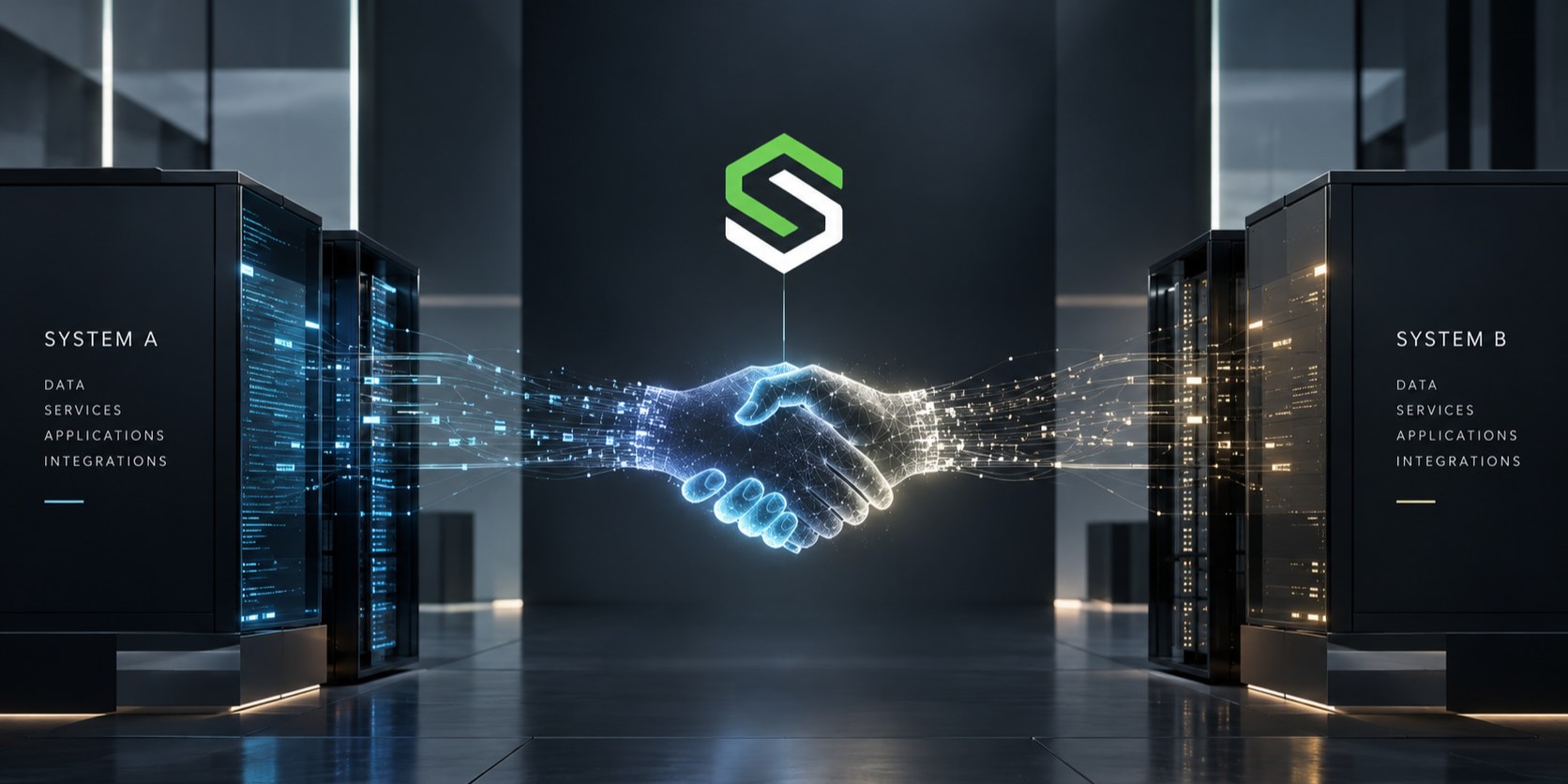
When a user accesses a system, their identity is usually verified before access is granted. Depending on the system, this may involve passwords, multi-factor authentication, roles, or other security mechanisms.
But in modern systems, a significant amount of communication does not take place between a user and an application. It happens between systems themselves.
One platform may request data from another system. An API may communicate with a backend. An application may connect to an external service to execute a process.
In these situations, a question arises that is just as important as verifying a user’s identity: how does a system know who is on the other side of the connection?
An Encrypted Connection and a Verified Identity Are Not the Same Thing
TLS is widely used to protect communications while data is in transit. In a standard HTTPS connection, the client verifies the server’s certificate to ensure it is communicating with the intended destination.
Mutual TLS, or mTLS, takes this process one step further: both parties present and verify their certificates. The server verifies the client, and the client verifies the server.
In practice, this means that the connection is not based solely on the question, “Is this communication protected?”, but also on “Is the other party really who it claims to be?”
An API Is an Entry Point into a System
APIs are designed to provide systems with a structured way to communicate.
Through them, data can be retrieved, information can be updated, processes can be triggered, or functionality from another system can be used.
For this reason, API security is not simply about protecting an endpoint. It also requires defining who can use it, what they are allowed to do, and how the identity of the system requesting access is verified.
As platforms become increasingly interconnected, these relationships need to be treated as part of the security architecture itself.
Trust Between Systems Must Be Designed
A large software ecosystem may include dozens of applications, APIs, internal services, and external platforms exchanging information.
Not every component should have the same level of access. One system may only need to read a particular category of data, while another may be authorized to initiate a process or modify information.
Trust, therefore, should not simply result from the fact that two systems are connected. It should be built around verifiable identities and clearly defined access rules.
This is also one of the principles behind Zero Trust approaches: being located within a network should not, by itself, be considered sufficient proof of trust.
Security Is Extending Across the Entire Communication Chain
This direction is becoming increasingly visible across cloud platforms as well.
On September 8, 2026, AWS expanded API Gateway with support for organization-managed certificates for mTLS authentication with backends. This enables a backend to verify the identity of API Gateway before accepting the connection. Combined with client-side mTLS, mutual authentication can extend from the client to the API and then from the API to the backend.
The technology itself is only one example of a broader shift in system architecture: security does not end once the user has been verified. It continues throughout the communication between components.
At Soft & Solution Group, security and integration are approached as parts of the same architecture. When systems are connected, what matters is not only whether information can move from one to another, but also how identities are verified, how access is controlled, and how communication is protected throughout the process.
As Ermal Beqiri, founder of Soft & Solution Group, says:
“In a digital ecosystem, trust is built into every connection. When systems recognize each other’s identity and communicate according to clearly defined rules, security becomes part of the architecture itself rather than simply a layer around it.”
The more systems become interconnected, the more important the way trust is established between them becomes.
Because in modern architecture, the question is not simply whether two systems can communicate, but how they know who they are communicating with and what each one is allowed to do.