
The Role of APIs in the Integration and Automation of Digital Systems
Date: May 25, 2026
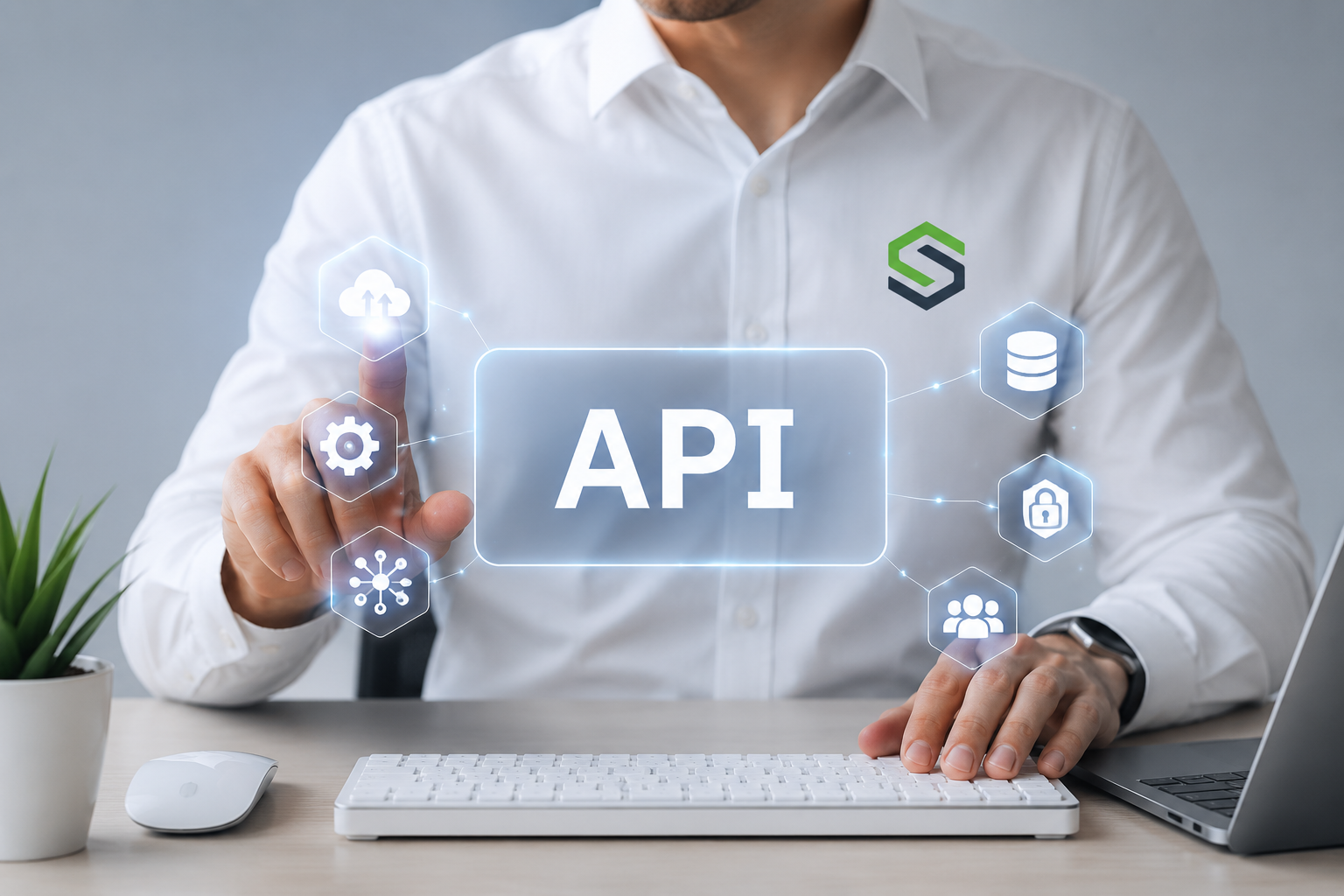
APIs as a Critical Part of Modern System Architecture
In modern software development, APIs are no longer viewed simply as communication mechanisms between systems. In many cases, they represent the infrastructure on which the operational stability of a platform depends.
In the systems developed by Soft & Solution Group, APIs directly influence performance, operational continuity, data synchronization, and the way systems respond in real time.
As platforms become more complex, challenges increasingly shift away from visual interfaces and toward the architecture of communication between systems. Today, almost every modern platform needs to interact simultaneously with databases, cloud services, mobile applications, identity systems, external platforms, and third-party services. In this structure, APIs become one of the most critical operational layers of the system.
The Real Challenge Is Not Connectivity, but Stability Under Load
The real challenge is not creating an endpoint or sending a request. The challenge begins when systems must operate under real production load, with thousands of simultaneous requests, continuous data synchronization, and processes that need to respond in real time without losing stability.
In Soft & Solution Group projects, one of the most critical aspects is how communication between systems is managed under high usage volume. When integrations are not properly designed, operational issues appear very quickly. Latency, request failures, synchronization interruptions, and overloaded services can directly affect platform functionality and user experience.
In large-scale digital systems, API stability becomes just as important as the business logic itself.
Data Synchronization Across Distributed Systems
One of the most important challenges in modern architecture is data consistency. In distributed systems, information no longer exists in a single location. The same platform may communicate simultaneously with mobile applications, payment systems, fiscalization services, cloud infrastructure, and multiple databases.
In this environment, ensuring that all systems remain synchronized in real time becomes significantly more complex.
For this reason, Soft & Solution Group projects use mechanisms related to transaction flow management, retry strategies, event-driven communication, and state consistency control. These processes are often invisible to end users, but they directly impact the real operational stability of the system.
How API Performance Affects Platform Performance
API performance is a critical element in modern system architecture. In many cases, platform performance is not limited by the database or the frontend layer, but by the way services communicate with one another.
A slow or poorly optimized integration can create bottlenecks that affect the entire architecture of the platform.
In the systems developed by Soft & Solution Group, API performance monitoring is part of ongoing operations. Request tracing, traffic monitoring, load balancing, caching mechanisms, and asynchronous processing are used to control how systems behave under real production load and to prevent operational interruptions.
As systems scale, integration performance becomes a core part of platform reliability.
Security in System-to-System Communication
Security is equally critical in API communication. In practice, API security goes far beyond authentication. The more systems become interconnected, the larger the exposure surface becomes and the greater the need for continuous traffic and access control.
In Soft & Solution Group projects, API communication is treated as a critical part of operational security. Granular access control, encrypted communication, traffic inspection, auditability, and continuous monitoring are integrated into the architecture of the systems being developed.
In environments where sensitive data and real-time operations are involved, API communication must remain controlled, traceable, and continuously monitored.
API Versioning and Long-Term Maintenance
Another challenge that is often underestimated is API versioning and long-term maintenance. In systems that operate for years and integrate with multiple external platforms, changing a single API can directly affect the stability of existing integrations and the operational processes built around them.
For this reason, Soft & Solution Group treats API lifecycle management as part of the long-term system architecture rather than as a temporary technical implementation.
Maintaining integration stability and compatibility between systems is essential for operational continuity.
Modern Architectures Are Becoming Increasingly API-Centric
Microservices, distributed systems, and cloud-native architectures have made communication between services one of the most critical parts of the system itself.
In this environment, the way APIs are designed, monitored, and maintained directly impacts platform performance, scalability, and operational stability.
In Soft & Solution Group projects, APIs are not treated simply as technical integrations, but as part of the operational architecture that keeps systems functioning continuously in real time.
An Approach Built Around Operational Stability
As Ermal Beqiri, founder of Soft & Solution Group, explains:
“In modern systems, the challenge is no longer only about building functionalities. The real challenge is how systems communicate with each other in real time and under production load. When integrations are not designed properly, operational issues appear very quickly.”
In the systems developed by Soft & Solution Group, APIs are a critical part of the operational architecture. They directly impact performance, automation, data synchronization, and the stability of systems that need to operate continuously in real time.