
Physical AI: How Intelligent Robots Are Learning to Act in the Real World
Date: November 2, 2026
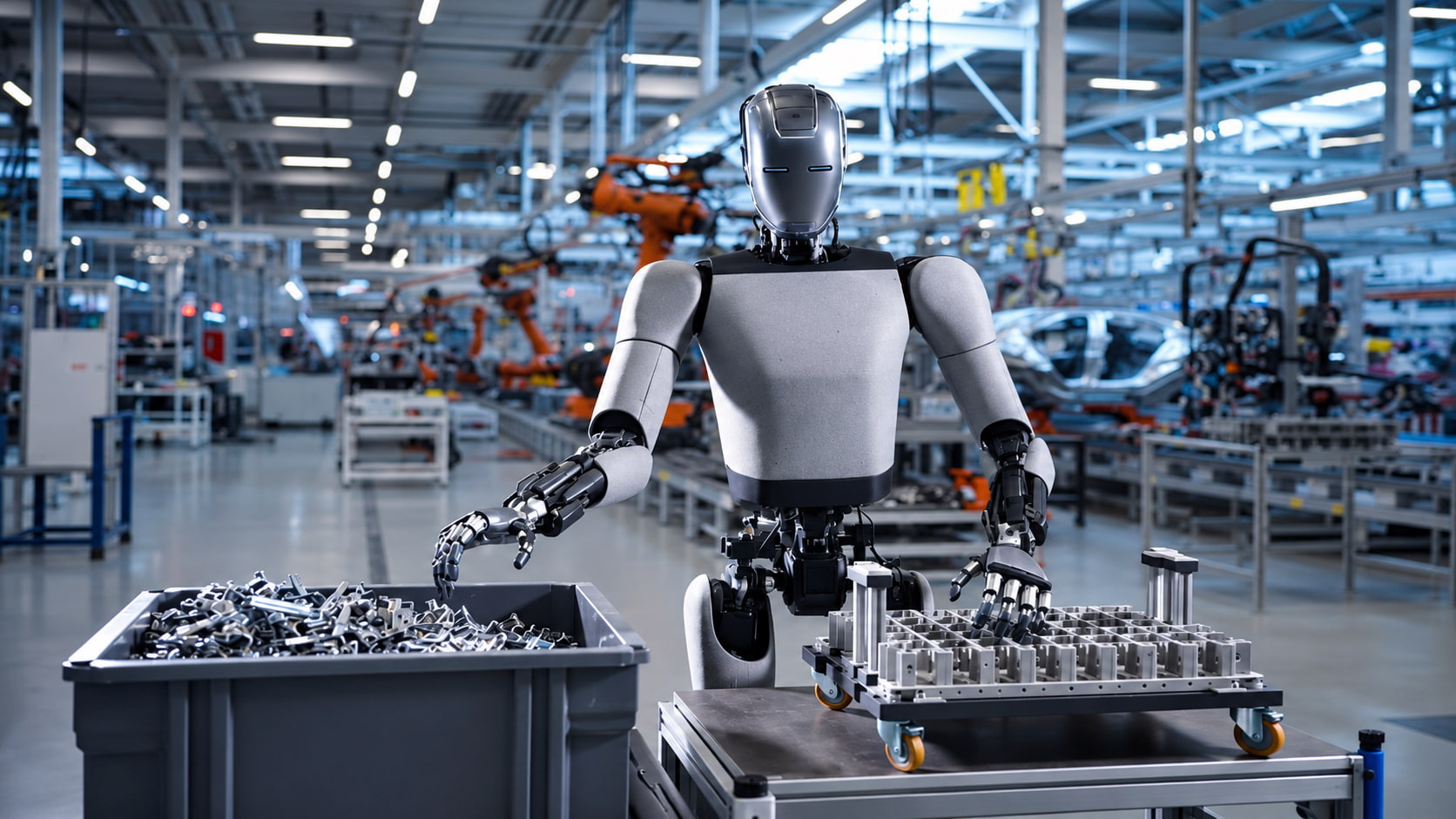
Artificial intelligence is moving beyond digital environments and into the physical world. Physical AI combines AI models, robotics, sensors, and control systems so machines can perceive their surroundings, interpret information, and take action. In 2026, this approach is gaining attention in manufacturing, logistics, healthcare, and other sectors where intelligent systems must interact safely with people and objects.
Unlike software that processes only text, images, or on-screen data, Physical AI must respond to changing conditions in real time. A robot may identify an object, estimate its position, plan a movement, and adapt when circumstances change. This requires perception, reasoning, and physical control to work together.
For businesses exploring this technology, **Soft & Solution Group** recommends starting with practical use cases and operational readiness. Physical AI is not simply about placing a robot in a workplace; it means matching intelligent capabilities to a defined task, suitable infrastructure, and measurable outcomes.
Where can Physical AI make a difference?
In manufacturing, intelligent robots can support assembly, inspection, material handling, and repetitive tasks while adapting to product or environmental variations. In warehouses, they can move goods, organise inventory, and coordinate with people and other machines. In agriculture, AI-enabled equipment can monitor crops, apply targeted treatments, or assist with harvesting.
Healthcare and service environments are also exploring robotic assistance for logistics, rehabilitation, and precision tasks. Autonomy levels vary, and many deployments still require human supervision, controlled environments, and specific safety measures
What makes Physical AI possible?
Physical AI brings together several technologies. Cameras, lidar, force sensors, and other devices collect environmental information. AI models interpret the inputs, planning software selects possible actions, and robotic hardware and control systems translate decisions into movement. Feedback helps the robot adjust its behaviour
Training is also essential. Simulations allow robots to encounter many scenarios before real-world operation, while field testing reveals differences between simulated and actual conditions. Reliable deployment also requires robust connectivity, integration with existing systems, and planned maintenance
Challenges, safety, and limitations
The physical world is unpredictable: objects move, lighting changes, and people may enter a robot’s workspace. AI can misinterpret a situation or select an unsuitable action, creating risks of damage or injury. Safety requires risk assessment, physical safeguards, restricted zones, emergency stops, and human intervention when necessary
Businesses must also consider privacy, cybersecurity, accountability, and staff training. A robot connected to operational networks may introduce new risks, while employees need clear procedures for collaboration. Not every task is suitable for full autonomy; supervised robotics may be the safer option
How should adoption be evaluated?
Start with a specific task that addresses a real operational problem. Assess the environment, equipment, data, safety constraints, and integration requirements. A pilot should define measurable indicators such as task completion, accuracy, downtime, productivity, and incidents
Include hardware, software, integration, training, monitoring, and maintenance in the cost assessment. Expand only after testing demonstrates consistent performance and the organisation has procedures for managing exceptions or failures
Conclusion: intelligence must act safely in the real world
Physical AI is connecting artificial intelligence with machines that can operate in real environments. Its potential spans industrial and service applications, but successful adoption requires practical objectives, reliable engineering, safety, and human oversight. Progress should be measured by how responsibly and effectively a machine solves a real problem
As Ermal Beqiri, founder of Soft & Solution Group, explains:
“The future of Physical AI is not simply making machines move, but turning them into useful, reliable, and safe partners in solving real-world challenges.”