
How Digital Transformation Has Changed the Delivery of Public Services
Date: May 26, 2026
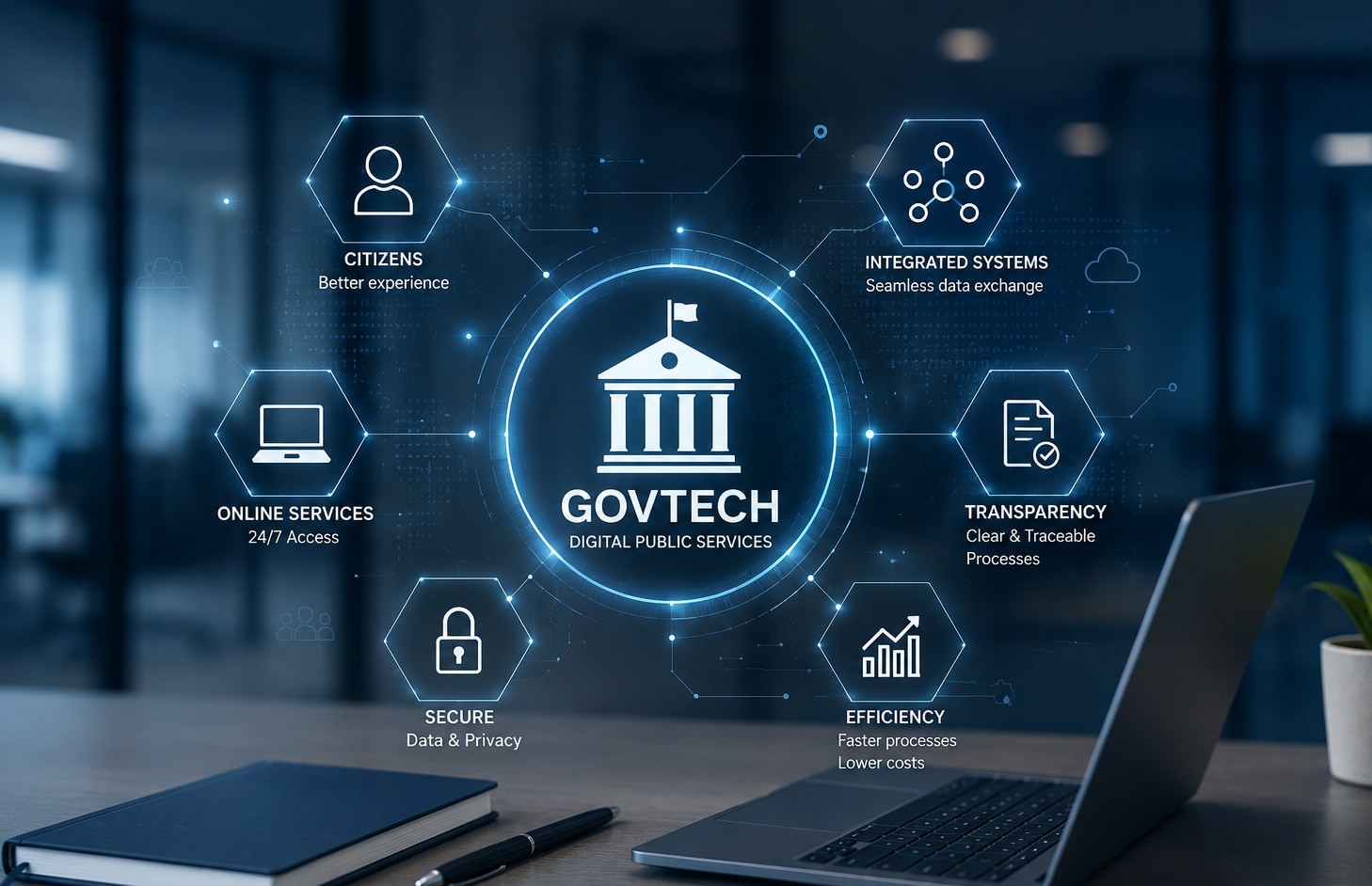
For many years, accessing a public service required time, physical documents, and fragmented processes. Citizens often had to wait at service counters, submit documents to multiple institutions, and repeatedly provide the same information throughout different procedures.
The lack of integration between systems created delays, increased administrative costs, and made access to information more difficult. For institutions, this meant more manual processes and lower operational efficiency.
How Digital Projects Brought Change
Digital transformation is not simply about moving documents from paper to a screen. It involves redesigning processes, integrating systems, and creating a simpler experience for users.
Through online platforms, automated data exchange, and electronic identification, many procedures that once required days or even weeks can now be completed in just a few minutes.
In projects like these, technology does more than replace existing processes. It creates a new way of operating where information moves faster, institutions collaborate more effectively, and citizens receive services with fewer barriers.
Results That Demonstrate Success
The success of digital transformation is measured by the real impact it creates in the daily lives of users.
Reduced waiting times, improved process traceability, an expanded range of online services, and lower administrative costs are among the clearest indicators of success.
When processes become faster and more transparent, the benefits extend beyond institutions. Citizens and businesses gain easier access to services while spending less time navigating administrative procedures.
Technology as Part of Continuous Improvement
Digital transformation is not a project with a defined beginning and end. It is an ongoing process of improvement that requires continuous development, new integrations, and adaptation to changing user needs.
As systems and services continue to evolve, it becomes increasingly important to build platforms that can scale, integrate seamlessly, and support future requirements.
A Results-Oriented Approach
As Ermal Beqiri, founder of Soft & Solution Group, explains:
“Today, people expect services to be fast, simple, and accessible. Digital transformation has enabled the shift from slow, complex processes to services that can be accessed in just a few clicks, significantly improving the user experience.”
Digital transformation has fundamentally changed the way public services are delivered. Technology continues to play a key role in modernizing public administration and improving the experience of citizens and businesses alike.