
GovTech Is Entering a New Era
Date: July 2, 2026
For more than a decade, the primary goal of GovTech was clear: digitize public services.
Online applications, electronic documents, and digital platforms transformed the way citizens and businesses interact with public institutions. It marked a significant step toward the modernization of public administration.
Today, however, the challenge has evolved.
The focus is no longer simply on moving services online. It is about building systems that communicate with one another, automate complex workflows, and use data intelligently to deliver faster, more accurate, and more efficient public services.
This is the new era of GovTech.
From Standalone Platforms to Connected Ecosystems
Modern public services are no longer built as isolated applications.
They operate as part of a connected ecosystem where different systems exchange information in real time through APIs, interoperability platforms, and integrated software architectures.
When digital identity, government registries, payment systems, and institutional platforms work together seamlessly, processes become significantly faster while reducing manual intervention.
In this model, citizens no longer need to move information from one institution to another.
The systems do it automatically.
Automation Is Transforming Public Services
The next generation of GovTech platforms is about far more than digital forms.
It is built around intelligent process automation.
Workflow engines, business rules, automated validation, and process orchestration are reducing processing times while eliminating many of the manual steps that previously slowed down administrative procedures.
The impact is already visible.
Processes that once required hours of paperwork or multiple visits to public offices can now, in many cases, be completed in just a few minutes through integrated and automated systems.
Artificial Intelligence Is Opening the Next Chapter of GovTech
Artificial Intelligence is about much more than chatbots or virtual assistants.
Across the public sector, AI is being used to classify documents, analyze large volumes of data, support decision-making, detect anomalies, automate verification processes, and optimize administrative workflows.
As these technologies continue to evolve, institutions can dedicate more time to high-value decisions while routine processes are handled by intelligent systems.
AI is not replacing public administration.
It is making it more efficient.
Architecture Is the Foundation of Every GovTech Platform
Behind every modern GovTech solution is a software architecture designed for scalability, security, and high availability.
Millions of transactions, thousands of concurrent users, and continuous data exchange require platforms that operate with exceptional reliability.
Interoperability, cloud infrastructure, observability, data governance, and cybersecurity are no longer optional capabilities.
They are the core building blocks that define the quality, resilience, and long-term sustainability of modern public platforms.
The Future Is Built on Intelligent Systems
The next phase of GovTech will not be measured by the number of services available online.
It will be defined by how effectively systems collaborate, automate processes, and leverage Artificial Intelligence to deliver increasingly efficient public services.
GovTech platforms are no longer designed as standalone applications.
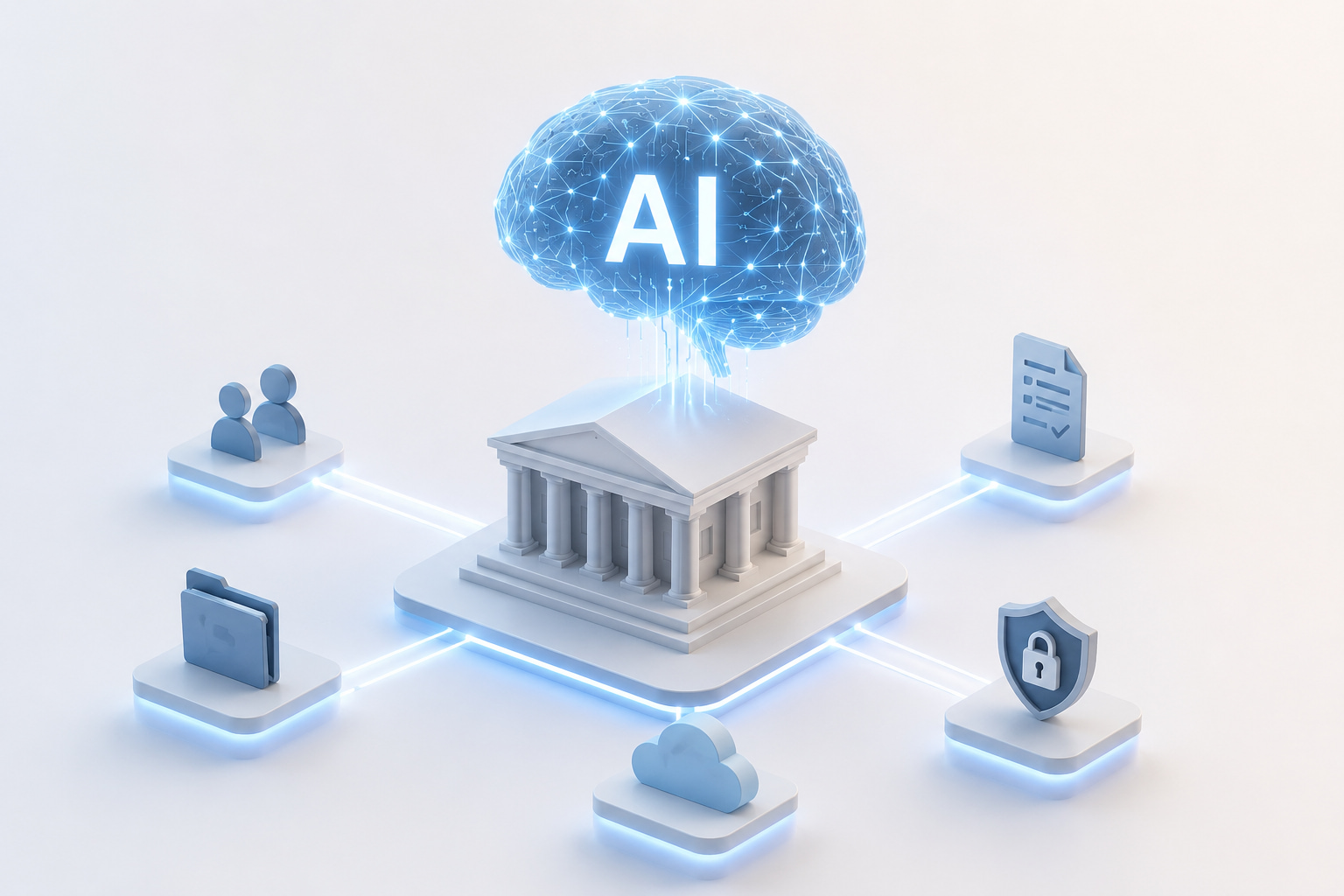
They are engineered as interconnected ecosystems where digital identity, secure data exchange, process automation, and Artificial Intelligence work together to create a more modern, agile, and responsive public administration.
Our Vision
The next generation of digital public systems will be built on open architectures, intelligent automation, and Artificial Intelligence that empowers institutions to deliver faster, smarter, and more efficient public services.
As Ermal Beqiri, founder of Soft & Solution Group, says:
“Today, we are no longer talking only about digitalization. We are talking about designing systems that are more intelligent, more connected, and built to evolve alongside the institutions that rely on them. That is what makes GovTech sustainable for the long term.”
GovTech is no longer just about digital transformation. It is about engineering intelligent systems that make public administration more efficient, more connected, and ready for the challenges of the future.