
From One Vulnerability to the Next Fix: How Is AI Creating Security Memory?
Date: September 28, 2026
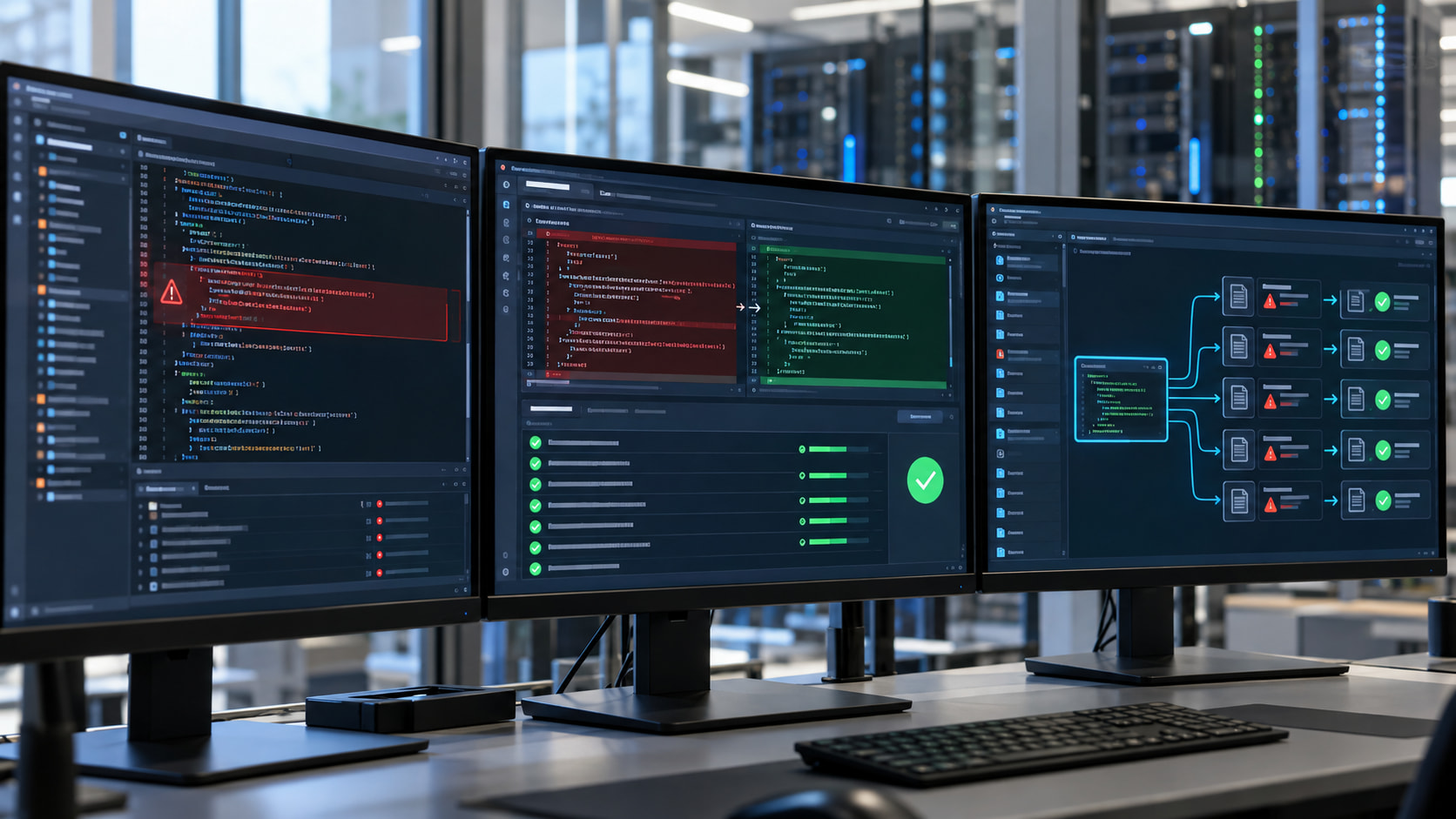
Fixing a software vulnerability is typically treated as the resolution of a specific problem. The team identifies the cause, prepares the change, verifies the code, and closes the security alert. The knowledge created during this process may be documented, but it is not always retrieved automatically when a similar problem appears.
The use of Artificial Intelligence is changing this model. Automated remediation systems can analyze vulnerabilities, propose changes, and help developers prepare solutions. Now, another capability is emerging: retaining the fix pattern so it can be used again in the future.
This creates what can be described as AI security memory. The system is not limited to fixing the current problem but retains the useful context of the solution and uses it to address other alerts within the same repository.
On September 25, 2026, GitHub announced that Agentic Autofix can use Copilot Memory for customers who have enabled this functionality. When the system creates a fix, it stores the solution pattern as a memory for future use. According to GitHub, these memories can also help other Copilot features, such as code review and the cloud agent, understand secure development patterns unique to the relevant repository. Agentic Autofix and Copilot Memory are currently in public preview.
Fixing a vulnerability creates new knowledge
Every vulnerability that is discovered reveals something about how a system was built.
The problem may be related to insufficient data validation, improper authorization management, the use of an insecure function, or the way components exchange information. The fix does not merely change a few lines of code. It also reveals a technical pattern that should be avoided in the future.
In traditional processes, this knowledge may remain with the developer who implemented the fix, in a pull request discussion, or in internal documentation. When another similar problem appears, the team must find and interpret this information again.
Copilot Memory makes it possible to retain the fix pattern in a form that the AI system can retrieve when analyzing another alert. Instead of treating every problem as an entirely new case, AI can use the knowledge generated by previous fixes.
Memory is connected to the repository’s context
Not every security practice is implemented in the same way across every project.
Two applications may use the same programming language but have different architectures, libraries, and standards. A remediation approach that is appropriate for one repository may not be the right solution for another.
For this reason, the value of Copilot Memory does not lie only in retaining a general security rule. It is connected to the ability to learn from how problems have been resolved within a specific repository.
If a team uses a specific mechanism for authorization, validation, or error handling, previous fixes can provide AI with context about how similar problems should be addressed in that project.
This brings the system closer to the team’s actual standards and reduces the possibility that it will propose a generic solution that does not fit the existing architecture.
From one fix to other alerts
A security pattern can appear in several parts of the same codebase.
If a vulnerability was caused by the incorrect use of a function, the same usage may also exist in other files. If the problem is related to a missing authorization check, the same gap may have been repeated in similar processes.
When the fix pattern is retained, the system can use it as context when addressing other alerts. This does not mean that the same change should automatically be copied everywhere. It means that AI has a better starting point for understanding how the team previously resolved that category of problem.
AI security memory can therefore transform an individual fix into reusable knowledge for the entire repository.
One agent can teach another agent
One of the most important changes is that memory is not limited only to the system that created the fix.
According to GitHub, stored patterns can also be used by other Copilot features. A solution created during automated remediation can provide context to an agent reviewing code or to a cloud agent implementing another change.
This creates a new form of collaboration between AI systems. One agent identifies the correct way to fix a problem, while other agents can use that knowledge during their own tasks.
In such a process, memory becomes a shared layer of context. It helps agents function not as isolated tools but according to the same practices and technical decisions.
Code review can use the history of previous fixes
Code review usually focuses on the change being proposed at that moment. The developer or automated system analyzes whether the code is correct, secure, and consistent with the project’s standards.
When a memory of previous fixes exists, code review can have more context.
If a new change reintroduces a pattern that previously created a vulnerability, the system can identify it more easily. If the team has approved a particular way of resolving a security problem, AI can use it as a reference while reviewing new code.
This shifts security from reacting after a vulnerability is discovered to preventing it during the development process.
Memory does not only help teams fix problems faster. It can also help prevent the same mistake from returning.
Stored knowledge must be controllable
An AI system’s memory should not automatically be considered an infallible source.
A previous fix may have been appropriate for its context at the time but not for an architecture that has since changed. A pattern may become outdated following a library update or a change in security standards.
There is also the possibility that a stored solution was incomplete or too closely tied to a particular case. If it is used without verification, it may lead to unsuitable decisions in other situations.
For this reason, memory should be managed like any other technical resource. It must be possible to understand where a pattern originated, when it was created, in what context it was used, and whether it remains valid.
Memory does not replace human verification
A proposal based on a previous fix may be better suited to the repository, but it must still be reviewed.
Developers must verify whether the change genuinely eliminates the vulnerability, whether it creates side effects, and whether it respects the current architecture. Automated tests can confirm part of the behavior, but not necessarily every consequence of a security decision.
AI’s role is to provide context, identify patterns, and prepare a better-informed solution. Responsibility for accepting the change remains with the team that maintains the system.
The more AI learns from the repository’s history, the more important it becomes for that history to be accurate and verified.
Security can become shared system knowledge
In many organizations, security practices are distributed across documentation, static analysis rules, code reviews, and the experience of specialists. The challenge lies in turning this knowledge into an active part of the development process.
AI security memory can help bring these elements together. When the system retains how a problem was fixed and provides that context to other tools, security practices become more accessible during everyday work.
An agent that writes code, a system that reviews a pull request, and a tool that resolves alerts can all rely on the same approved patterns.
This can create greater continuity between the detection, remediation, and prevention of vulnerabilities.
Security memory requires clear governance
For Soft&Solution Group, AI’s ability to retain and reuse security fixes represents an important step toward systems that learn from their technical history. However, this capability must be accompanied by clear rules for creating, using, and updating memory.
Organizations must determine which fixes can be retained, who verifies them, which agents can use them, and when an outdated pattern should be reviewed or removed.
As Ermal Beqiri, founder of Soft&Solution Group, explains:
“When an AI system retains the way a vulnerability was fixed, it is not merely memorizing a few lines of code. It is building knowledge about how the organization approaches security. This memory can improve future fixes, but it must be verified, controllable, and always connected to the context in which it was created.”
Automated remediation is moving from resolving a single alert toward creating knowledge that can be used again. Every resolved vulnerability can become a source of context for problems that appear later.
This does not mean that AI will automatically know the correct solution to every vulnerability. It means, however, that the system does not have to begin every analysis from scratch.
When previous fixes are retained, verified, and used carefully, AI security memory can transform a repository’s technical history into an active protection mechanism.