
Digital Twins: The Technology Connecting the Physical and Digital Worlds
Date: August 19, 2026
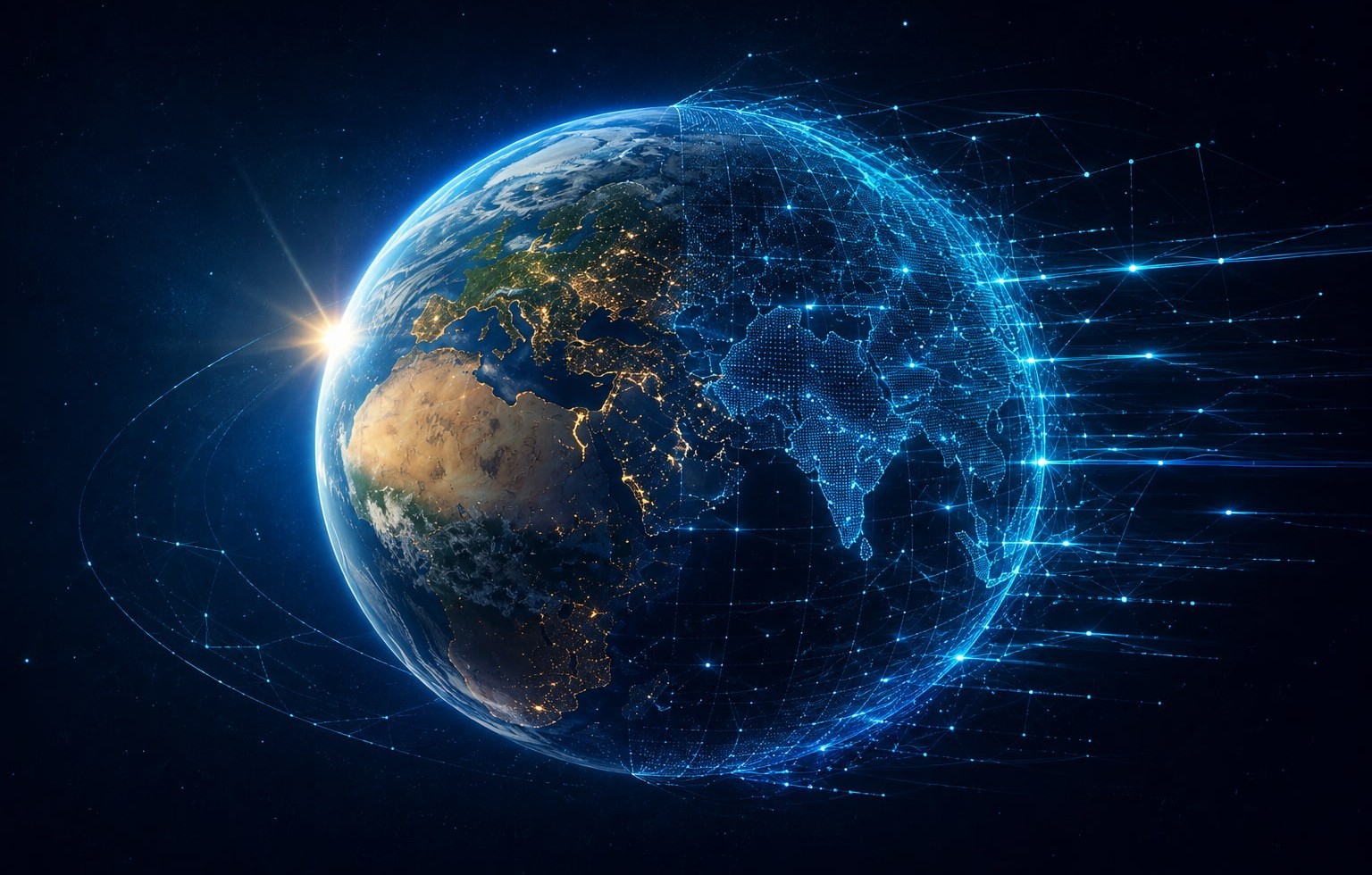
For years, we have been building digital systems to manage what happens in the real world. We collect data, monitor processes, connect devices, and build platforms that show us what is happening.
Digital Twins take this idea one step further.
Instead of simply storing information about something in the real world, a digital system creates a dynamic digital representation of it, one that can be updated as the physical reality it represents changes. This “twin” could represent a device, a building, a process, or even a far more complex system.
But the most interesting part is that behind it lies much more than a visual model. There is an entire software ecosystem at work.
A Digital Twin is more than a 3D model
A Digital Twin needs to be connected to information coming from the real-world system. Sensors and IoT devices can generate data. APIs can transmit it. Cloud platforms can process and store it, while applications and analytics systems can turn it into useful information.
This means the digital representation does not remain static. It evolves as the physical system it represents changes. This is where a Digital Twin moves beyond being a model and becomes a software system connected to the real world.
Behind a digital “twin” are many real systems
At first glance, a Digital Twin may appear to be a single technology. In practice, it is the result of multiple technologies working together.
Data needs to be collected from different sources. Devices need to communicate. Systems need to be integrated. Information needs structure and context. Infrastructure needs to handle change, while applications need to make the information understandable and useful.
IoT, APIs, cloud platforms, data architecture, analytics, and software applications become part of the same architecture. The challenge, therefore, is not simply to create a digital twin. It is to build the flow of information that keeps it connected to the real world.
Digital Twins are as much a software challenge as a physical one
When we look at a Digital Twin of a building, infrastructure, or process, it is easy to focus on the physical asset being represented. But the ability to create and maintain that representation depends on software.
It requires integration between different technologies, continuous data management, communication between systems, security, scalability, and an architecture capable of evolving. In this sense, Digital Twins also reflect a broader shift in the direction of software engineering.
We are no longer building only systems that wait for user input and return an output. Increasingly, we are building systems that remain continuously connected to the environments they represent.
As Ermal Beqiri, founder of Soft & Solution Group, says:
“The value of Digital Twins does not lie in creating a digital copy, but in how that copy is used. Real-world data, simulation, and analysis come together to understand the system and assess changes before they are applied in the physical world.”
Integration, cloud, data, IoT, and applications no longer need to operate as separate technologies. When built on a shared architecture, they can create systems that do more than process information. They can dynamically reflect what is happening in the real world.
And perhaps this is where the most interesting idea behind Digital Twins lies: the physical and digital worlds are no longer treated as two separate systems, but as two parts of the same flow of information.