
Data Security in Digital Systems
Date: May 21, 2026
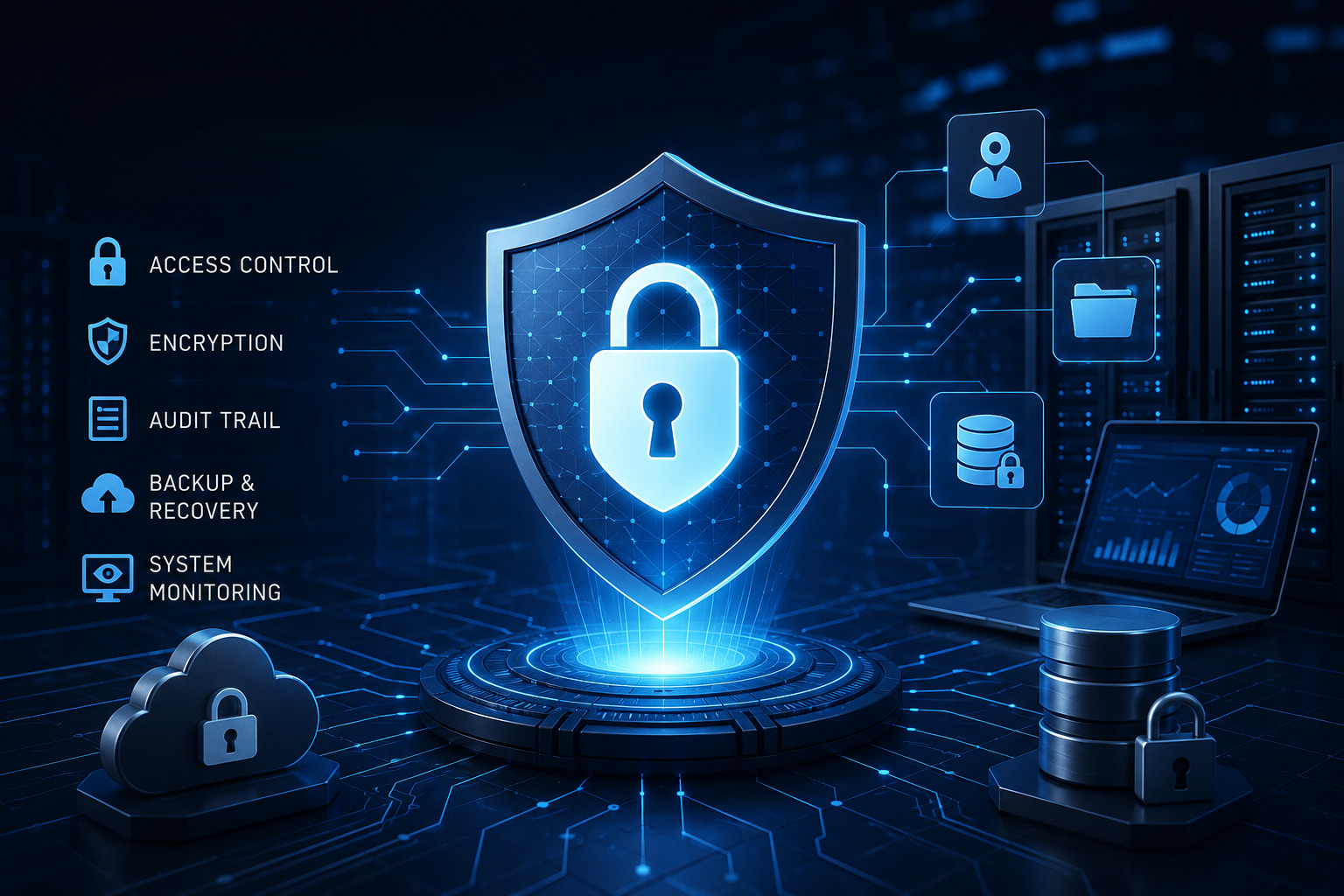
In digital systems used every day, data security cannot be treated as a separate technical element. It needs to be part of how the system is designed, developed, tested, and operated in real time.
The more data a system manages, the more important it becomes to protect that data during storage, transmission, and daily use.
Controlled architecture for stronger data protection
Security starts with architecture. From the design phase, it is important to define how data is stored, how it moves between modules, who can access it, and how actions inside the system are controlled.
A well-designed architecture makes the system easier to monitor, audit, and maintain over time.
Access control in digital systems
Access control is one of the most important elements of data security. In systems with multiple users, each role should only have the permissions needed to perform its function.
This reduces the risk of unnecessary information exposure and creates more control over the actions performed inside the system.
Data encryption during storage and transmission
Encryption is another essential part of data protection. Sensitive data should be protected during transmission through secure channels and during storage in databases, backups, or infrastructure environments.
This helps keep information protected even if part of the system is technically exposed.
Audit logs and action traceability
Beyond protection, a secure system also needs traceability. Audit logs help identify who accessed the system, what action was performed, when it happened, and what change was made.
This is important for technical control, auditing, and incident analysis.
Backup and data recovery
Security is also connected to operational continuity. Backups, data recovery, and periodic recovery testing are important parts of data protection.
A system is not truly secure if it does not have clear mechanisms to preserve and restore data in case of a problem.
Continuous system monitoring
Continuous monitoring helps identify unusual behavior, suspicious access attempts, unexpected performance changes, or deviations that may affect data and system functionality.
The earlier a problem is identified, the easier it becomes to respond without affecting users or active processes.
Updates and technical vulnerability management
At the same time, security requires controlled updates and ongoing vulnerability management. Software components, libraries, configurations, and integrations need to be maintained continuously.
Risks change throughout the system lifecycle, so security must remain an active part of technical maintenance.
An approach based on control and reliability
As Ermal Beqiri, founder of Soft & Solution Group, explains:
“Data security does not depend on a single technical measure. It depends on how the system is built, how it is controlled, and how it is monitored during daily use. A system becomes more reliable when every action is clear, every change can be traced, and data is protected at every stage.”
High data security is an essential part of digital systems used in practice. It helps protect information, strengthens operational control, and builds greater trust in systems that need to function every day.