Data Portability: Data Should Move as Easily as Your Business
Date: August 11, 2026
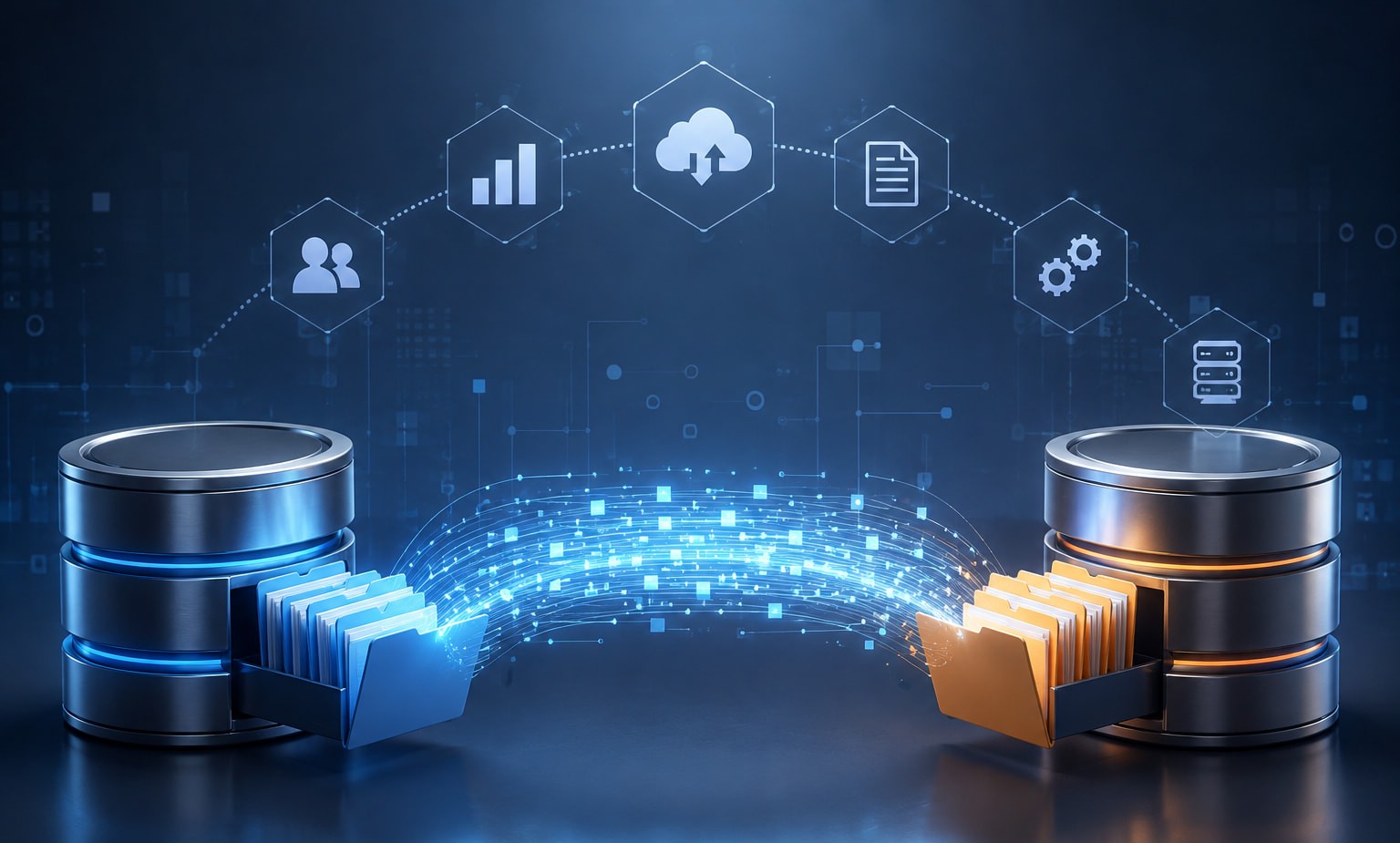
Every organization continuously generates and collects data. It is stored across platforms, applications, financial systems, CRM and ERP solutions, cloud environments, and many other systems that become part of day-to-day operations.
But there is one question that is often asked only when change becomes necessary:
How easily can you take your data and move it somewhere else?
This is where Data Portability comes in: the ability to transfer and reuse data across different systems, platforms, and environments without creating unnecessary technical barriers.
Owning Your Data Does Not Necessarily Mean Having Control Over It
An organization may own its data, but that does not automatically mean it can use that data wherever it chooses.
Problems arise when data is stored in proprietary formats, tightly tied to a specific platform, or requires complex processes to export and transfer.
In these situations, a migration that should theoretically be straightforward can turn into a lengthy and expensive project.
True control over data begins with the ability to move it.
Data Portability Is More Than Exporting a File
At first glance, moving data may seem simple: export it from one system and import it into another.
In practice, it is more complex.
Data structures, formats, metadata, relationships between information, and the way different systems interpret that information all directly affect how easily data can be migrated.
An export is useful only if the receiving system can understand and use the information correctly.
That is why Data Portability is closely linked to interoperability.
Open Standards Make Change Easier
When systems are built around open standards, well-documented APIs, and data structures that can communicate with other technologies, organizations retain greater flexibility.
They can switch platforms without losing their historical data.
They can integrate a new service without rebuilding the entire system.
They can migrate to a different infrastructure as their needs change.
Technology continues to evolve, so systems should be designed with the understanding that the environment they operate in today may look very different five or ten years from now.
Data That Cannot Move Can Also Limit Innovation
Data Portability is not only relevant when an organization decides to switch platforms.
It also determines how effectively an organization can use the data it already owns.
When information can move between systems, it can support new analytics, automation, integrations, and services that may not have been anticipated when the original platform was built.
In this way, data does not simply remain stored. It continues to create value.
Technology Freedom Starts with Data
Platforms change. Technologies are replaced. Needs evolve.
But data often remains one of an organization’s most enduring assets.
For that reason, a technology decision should not be evaluated solely on how well a system manages data today, but also on how much freedom it provides to use that data tomorrow.
As Ermal Beqiri, Founder of Soft & Solution Group, explains:
“When we choose a system, we spend a lot of time thinking about how it will store our data. It is just as important to think about what happens when the day comes that we need to move that data somewhere else.”
At Soft & Solution Group, we believe digital systems should give organizations control over their data, not restrict it. Data Portability, interoperability, and open standards provide the foundation for systems that can integrate, migrate, and evolve alongside an organization’s changing needs.