
AI and Cybersecurity: How Artificial Intelligence Is Changing the Global Threat Landscape in 2026
Date: October 29, 2026
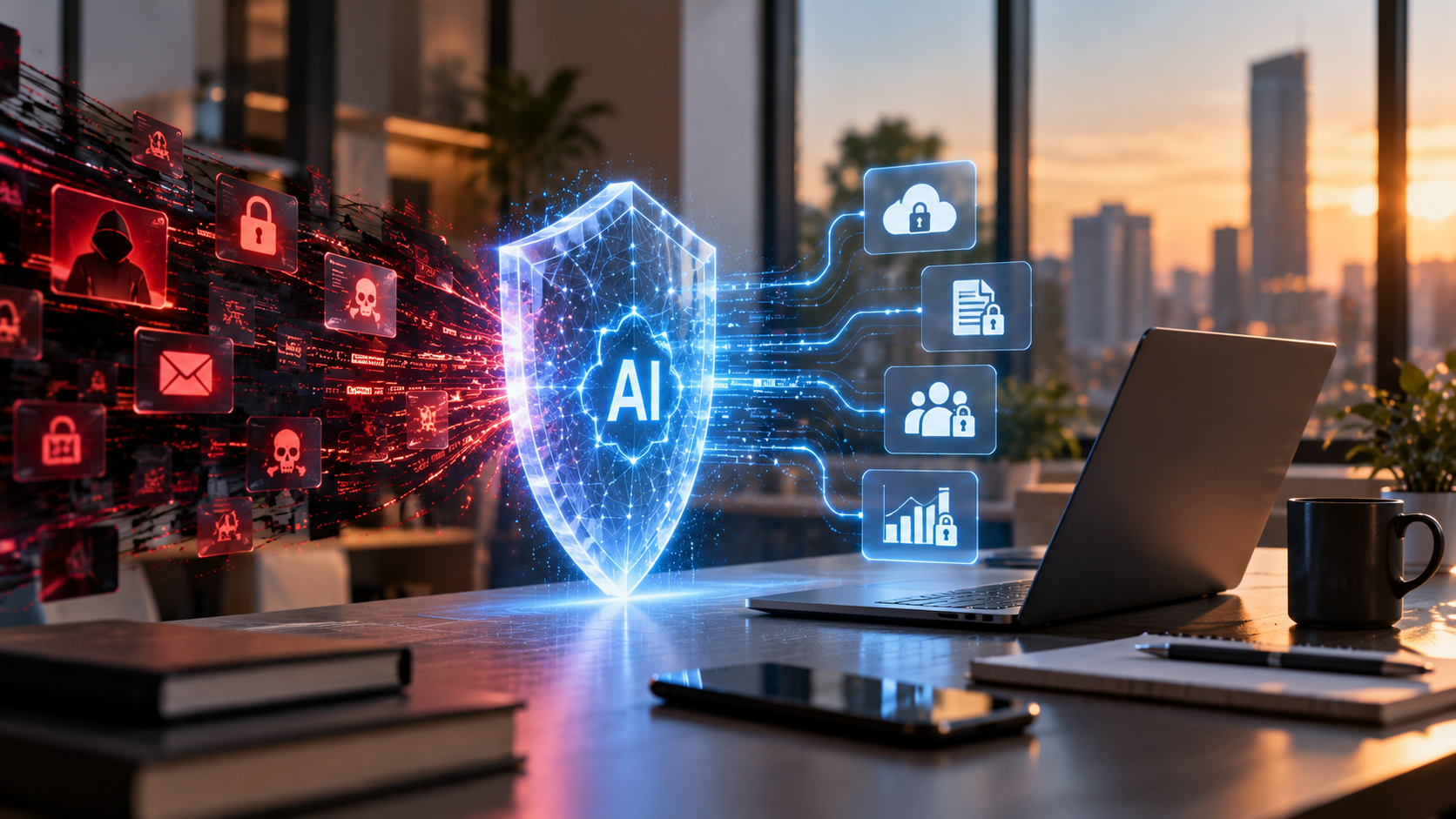
Artificial intelligence is changing how organisations respond to cyber threats. AI tools can help analyse large volumes of data, identify unusual behaviour, and detect suspicious activity more quickly. At the same time, attackers can use the technology to automate and tailor their campaigns. For businesses, cybersecurity is therefore a strategic responsibility, not just a technical issue.
AI-enabled security systems can analyse signals from networks, devices, applications, and user accounts to help teams identify threats. Their effectiveness depends on data quality, configuration, and oversight. AI does not replace human expertise and cannot guarantee that every attack will be prevented.
Soft & Solution Group recommends a planned approach: identify critical assets, assess risks, and apply controls suited to the organisation’s size and needs. Technology should support a clear security strategy rather than be treated as a standalone solution.
How is AI strengthening cyber defense?
AI can help detect anomalies, classify alerts, analyse suspicious emails, and prioritise incidents by risk. This can give IT teams more time to investigate significant cases and respond faster. Automating selected routine tasks can be useful, especially when teams must review large numbers of signals.
However, decisions affecting critical systems, user access, or customer data need clear rules and, where appropriate, human approval. False positives can distract teams, while an unidentified threat may go unaddressed.
What should businesses do to prepare?
Start by inventorying critical systems, data, and accounts. Enable multi-factor authentication, apply the principle of least privilege, and keep systems and applications updated. Establish backup procedures and regularly test data recovery.
Train employees to recognise phishing, impersonation messages, and unusual requests for payments or credentials. Define incident-reporting procedures, log important activity, and test response plans regularly. If AI tools are used, review how data is processed and who can access the results.
Risks and limits of AI in cybersecurity
Attackers may use AI to create more convincing deceptive messages, accelerate vulnerability research, or adapt their attempts. Defensive systems can also produce false alerts, miss context, or rely on incomplete data. Testing, monitoring, access controls, and regular policy updates are therefore essential.
How can businesses build a resilient strategy?
Measure detection and response times, confirmed alerts, test results, and recovery time. Also account for licensing, integration, training, and maintenance costs. Use these findings to improve controls and determine where automation delivers the greatest benefit.
Conclusion: security requires technology and accountability
AI can help businesses identify threats faster and make better use of IT resources, but it is not a replacement for security fundamentals. Effective protection depends on clear controls, updates, backups, employee training, and a tested incident response plan.
As Ermal Beqiri, founder of Soft & Solution Group, notes:
“Security technology creates value when it is combined with clear processes, prepared people, and defined accountability.”
The first step is to understand the organisation’s real risks, strengthen foundational controls, and use AI where it can measurably improve detection and response.