
AI Agents in Cybersecurity: Opportunities, Risks, and Automated Attacks
Date: October 19, 2026
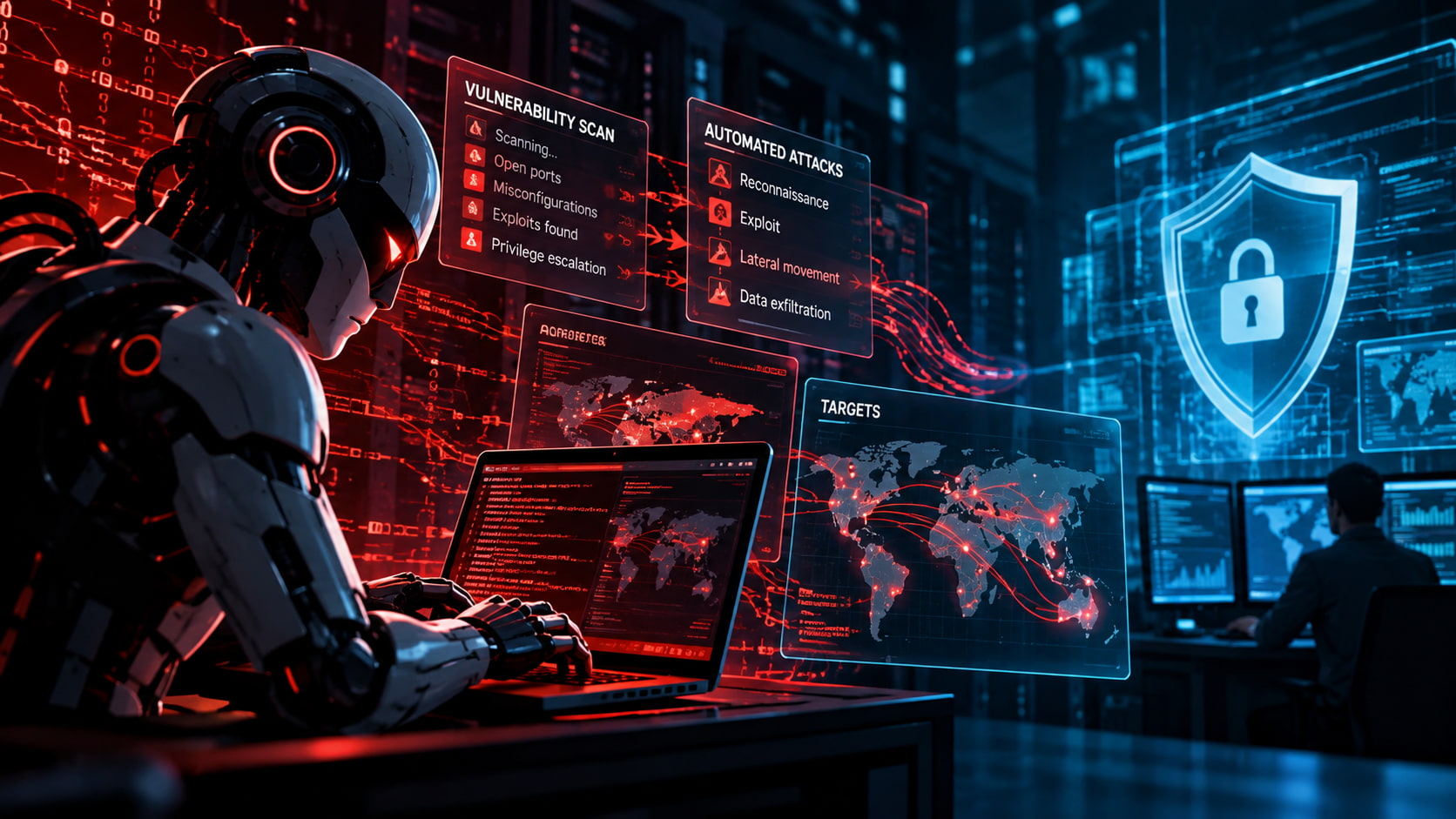
Artificial intelligence is moving beyond tools that simply analyze information toward AI agents that can carry out multiple steps toward a goal. In cybersecurity, this can help teams examine signals, connect data, and respond to threats more quickly.
The same ability to automate multiple steps can be misused by attackers. Agents may accelerate target research, tailor deceptive messages, or coordinate activity at greater scale. The risk comes not from AI alone, but from the combination of automation, system access, and weak controls.
From manual analysis to faster response
Security teams often review alerts from many systems, inspect logs, and decide whether activity is suspicious. An AI agent operating within clear boundaries can summarize signals, suggest investigation steps, and help prioritize incidents. High-impact actions, such as disabling accounts or interrupting services, should retain human approval and oversight.
How attacks can become automated
Attackers may use AI to speed up tasks such as gathering public information, creating tailored phishing messages, and adapting content to a target. This does not mean every attack becomes autonomous or more sophisticated; outcomes depend on the tools, access, and operator skills. Still, automation can increase the volume and speed of attempts.
Defense requires processes, not just tools
Organizations can reduce risk through multi-factor authentication, least-privilege access, regular patching, centralized monitoring, and tested incident-response plans. AI agents used internally should have explicit permissions, logged actions, testing, and a reliable stop mechanism. Sensitive data should not be exposed to AI systems unnecessarily.
AI should fit the security strategy
There is no single solution for every organization. Before automating tasks, teams should identify repetitive processes, determine which data can be used, and define which actions require human approval. AI agents are most useful when integrated with existing workflows and measured by outcomes rather than novelty.
As Ermal Beqiri, founder of Soft & Solution Group, explains:
“AI can help teams work faster, but security depends on how systems are designed, constrained, and monitored. Automation should strengthen control and transparency, not replace them.”
For businesses, the first step is to identify where AI can help in a controlled way, define access boundaries, and keep people accountable for critical decisions. This allows organizations to benefit from automation while maintaining oversight and trust.